The Auto-Reverse Feature That Saved Lives: How Safety Sensors Work and Why They Fail
In 1993, federal law mandated that every garage door opener include an auto-reverse safety system. The reason was grim: garage doors were killing and seriously injuring dozens of children every year. The photo-eye sensor system that resulted has since prevented countless tragedies—but only when it’s working properly.
Since launching our Las Vegas service area, we’ve helped hundreds of families with sensor-related issues—and we’ve seen what happens when these critical safety devices fail silently. This guide explains exactly how your safety sensors work, the common failure modes specific to Las Vegas conditions, and how to test whether your sensors are actually protecting your family. If your door closes without reversing when it should, this is a safety emergency—contact our emergency service team immediately.
How Safety Sensors Actually Work
Your garage door’s auto-reverse system uses two components that work together:
Photo-Eye Sensors (The Invisible Beam)
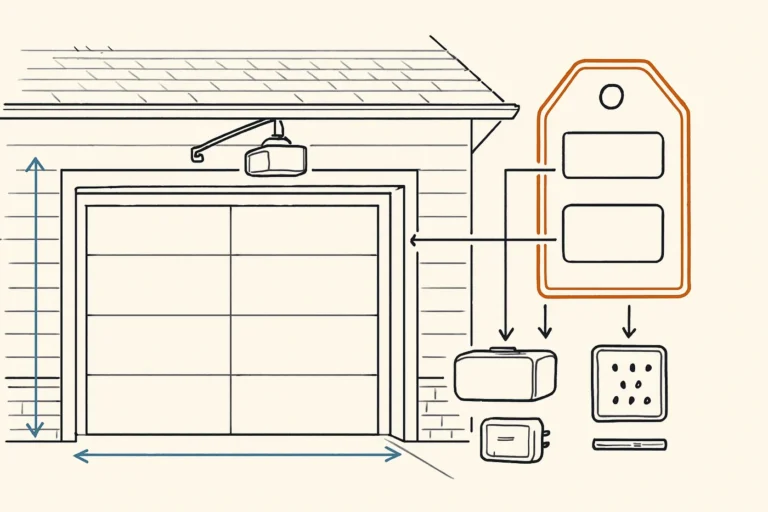
Two small sensors are mounted on either side of the garage door opening, 4-6 inches above the floor. One sensor (the transmitter) sends a continuous infrared beam to the other sensor (the receiver). When the beam is uninterrupted, the door operates normally. When anything breaks the beam—a child, a pet, a bicycle—the door immediately reverses.
- Transmitter (sending unit): Usually has an amber/yellow LED that stays solid when powered
- Receiver (sensing unit): Usually has a green LED that stays solid when aligned and receiving the beam
- Beam frequency: Infrared (invisible to the human eye)
- Response time: Reversal begins within milliseconds of beam interruption
Mechanical Auto-Reverse (The Pressure System)
In addition to photo-eye sensors, all modern openers include a force-sensing system. If the door contacts an obstruction during closing, the motor senses increased resistance and reverses. This is your backup system if the photo-eyes fail.
Critical point: The force-sensing system requires contact with an obstruction before reversing. The photo-eye system prevents contact entirely by detecting objects in the path before the door reaches them. This is why both systems must be working.
Why Sensors Fail in Las Vegas
Las Vegas creates a uniquely hostile environment for photo-eye sensors. Here are the specific failure modes we see most frequently:
Dust Coating (Most Common — 45% of Sensor Calls)
Fine desert dust accumulates on sensor lenses, gradually reducing beam strength until the receiver can’t detect it. After dust storms, we see a 300% spike in “door won’t close” calls—almost all are dust-coated sensors.
Fix: Wipe both sensor lenses with a soft microfiber cloth. Do this monthly, and immediately after any dust storm.
Heat-Induced Misalignment (25% of Calls)
Metal mounting brackets expand in Las Vegas heat (130°F+), slowly shifting sensor alignment over time. The sensors may be perfectly aligned in the morning but misaligned by afternoon. This creates intermittent “won’t close” issues that frustrate homeowners.
Fix: Use stainless steel mounting hardware (less thermal expansion) and verify alignment during peak heat hours, not just cool mornings.
Sun Interference (15% of Calls)
Direct sunlight hitting the receiver sensor can overwhelm the infrared beam, causing false triggering. This typically affects west-facing and south-facing garages during specific times of day when sun angle aligns with the sensor beam.
Fix: Install sensor sun shields (small hoods that block direct sunlight) or reposition sensors slightly to avoid direct sun exposure during problem hours.
Wiring Degradation (10% of Calls)
Heat cycles cause wire insulation to become brittle and crack over time. Cracked insulation allows moisture (from monsoon humidity spikes) to reach the wire, causing corrosion and intermittent connections.
Fix: Inspect wiring annually. Replace any wire with cracked or discolored insulation before it fails completely.
For a comprehensive troubleshooting approach to all opener issues including sensor problems, Utah Garage Doors has an excellent resource on 10 common reasons your opener doesn’t work.
How to Test Your Safety Sensors
Test your sensors monthly using this simple procedure:
Test #1: The Object Test
- Open the garage door completely
- Place a sturdy object (like a 2×4 board) flat on the ground in the center of the door opening
- Press the close button on your wall console
- Expected result: Door should reverse immediately when it contacts the board
- Failure: If the door pushes down on the board without reversing, your force settings need adjustment and the sensors may not be functioning
Test #2: The Beam Interruption Test
- Open the garage door completely
- Press the close button
- While the door is closing, wave your foot through the sensor beam (4-6 inches above the floor)
- Expected result: Door should immediately reverse direction
- Failure: If the door continues closing, the sensors are not functioning—this is a serious safety hazard
Test #3: The LED Check
- Check both sensor LEDs
- Transmitter (amber/yellow): Should be solid ON
- Receiver (green): Should be solid ON
- Blinking green: Sensors are misaligned—realign until solid
- No lights: Check wiring connections and power supply
For a step-by-step guide to diagnosing and resolving sensor issues, check out Utah Garage Doors’ comprehensive safety sensor installation and troubleshooting guide.
The Silent Danger: When Sensors Appear to Work But Don’t
The most dangerous sensor failure is partial failure—when the system appears functional but isn’t providing full protection:
- Weak beam: Sensors show solid LEDs but the beam is so weak from dust/degradation that it only detects large objects, missing small children or pets
- Delayed response: Door begins reversing but too slowly—it contacts the obstruction before fully reversing
- Bypassed system: Someone (previous homeowner, DIY installer) disabled the sensors because they were “annoying”—this is illegal and extremely dangerous
- Hold-to-close override: If your wall button must be held continuously to close the door, this means the sensors have failed and the system is in override mode—this bypasses photo-eye protection entirely
If you notice any of these conditions, schedule professional service immediately. Safety sensor issues are not a “when I get around to it” repair—they’re urgent safety concerns.
Protect Your Family with the Diamond Service Club
Safety sensors require regular attention to ensure they’re truly protecting your family. By joining our exclusive Diamond Service Club, you’ll receive bi-annual safety inspections that include:
- Complete sensor function testing (all three tests above, plus professional diagnostics)
- Sensor lens cleaning and alignment verification
- Wiring inspection for heat damage and corrosion
- Force settings calibration for proper auto-reverse sensitivity
- LED strength testing to detect degrading transmitters
Members receive priority scheduling, 20% off repairs, and the peace of mind that comes from knowing their garage door safety systems are professionally maintained and fully functional.
What Our Las Vegas Customers Say
Frequently Asked Questions About Safety Sensors
Can I operate my garage door without safety sensors?
No. Federal law (UL 325) requires photo-eye sensors on all residential garage door openers manufactured after 1993. Operating without functional sensors is illegal, voids your insurance coverage, and creates serious liability if someone is injured. If your sensors are malfunctioning, get them repaired—never bypassed.
Why does my door close fine with the wall button but not the remote?
This indicates your sensors have failed. When sensors detect a problem, most openers allow closing only by holding the wall button continuously (a deliberate override that requires you to watch the door). The remote won’t work because the system can’t verify the path is clear. This is your opener telling you the sensors need attention.
How often should I clean my sensor lenses in Las Vegas?
Monthly at minimum, and immediately after any dust storm. Use a soft, dry microfiber cloth—not paper towels or wet cloths, which can scratch lenses or leave residue. During monsoon season (July-September), check weekly as dust accumulation accelerates dramatically.
My sensor lights are solid but the door still won’t close. Why?
Several possibilities: The sensor beam may be partially obstructed by a cobweb or small debris you can’t see. The close-limit settings may be incorrect. Or the opener’s logic board may be malfunctioning. Try cleaning both sensors thoroughly first. If the problem persists, professional diagnosis is recommended.
Can sunlight really interfere with safety sensors?
Yes. Direct sunlight contains infrared wavelengths that can overwhelm the sensor’s infrared beam, causing false triggers. This typically happens at specific times of day when sun angle aligns with sensor position. Sun shields ($15-25) or slight sensor repositioning usually solve this issue permanently.