The Science Behind Your Garage Door: An Interactive 3D Experience
Ever wonder what’s really happening when you press that button on your garage door remote? There’s a lot more going on than meets the eye — from torsion spring physics to electromagnetic interference. We built an interactive 3D experience to show you exactly how it all works.
Why We Built This
At A+ Garage Doors, we believe informed customers make better decisions about their garage door systems. Whether you’re choosing a new opener, troubleshooting a noisy door, or just curious about the engineering behind something you use every day, understanding the science helps.
So we created The Science of Garage Doors, a fully interactive, 3D educational tool you can explore right in your browser.
Explore the Presentation Now →
What You’ll Learn
How Your Door Actually Moves
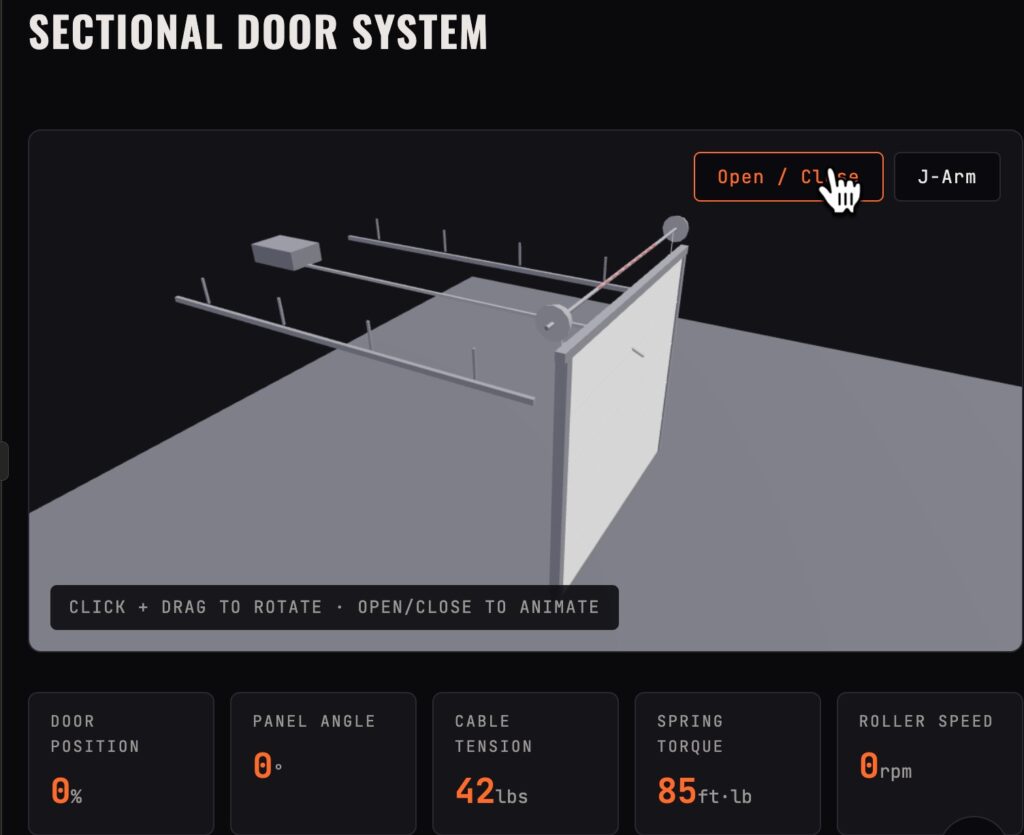
Our interactive door system model lets you open and close a sectional garage door and watch what happens in real time. You’ll see how the five panels hinge along the track, and live readouts show you door position, panel angle, cable tension, and spring torque as the door moves. It’s the kind of thing most people never think about — until something breaks.
The Physics of Torsion Springs
Torsion springs are the unsung heroes of your garage door. They store and release energy to lift hundreds of pounds of door weight, and they do it tens of thousands of times over their lifespan.
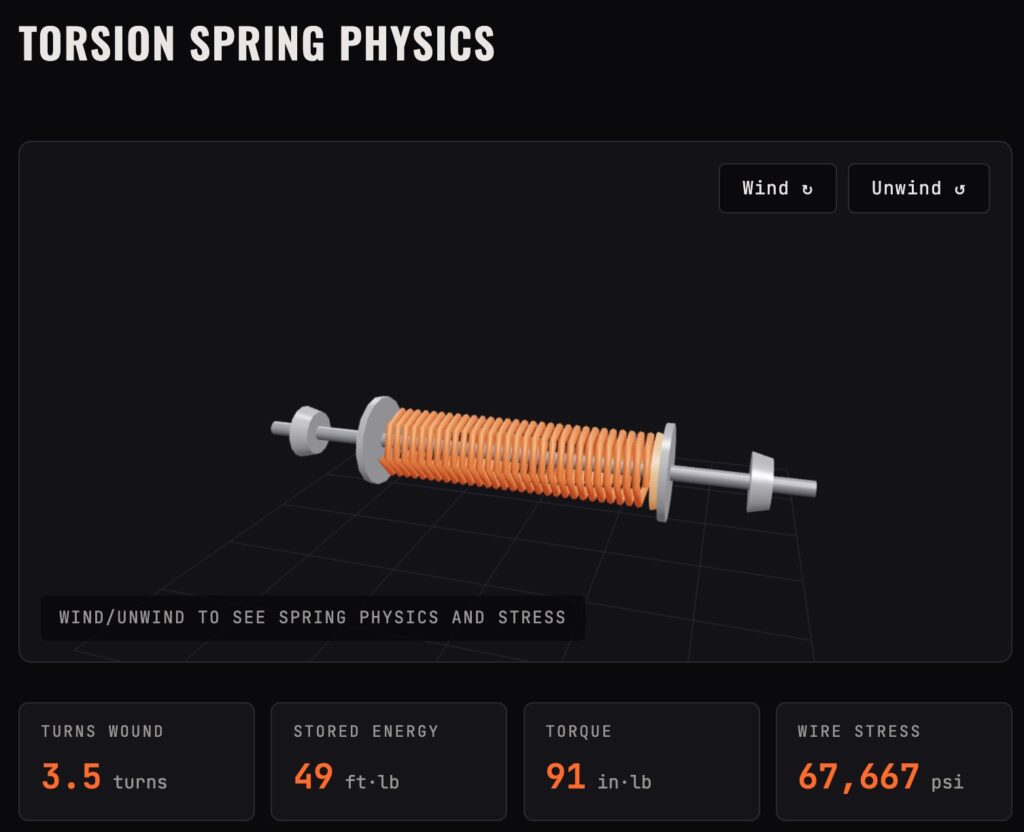
Our spring physics simulator lets you adjust the door weight from 80 to 400 lbs and watch how the spring responds. You’ll see how turns, stored energy, torque, and wire stress all change — and why spring sizing matters so much for safety and longevity.
Chain vs. Belt vs. Screw vs. Direct Drive
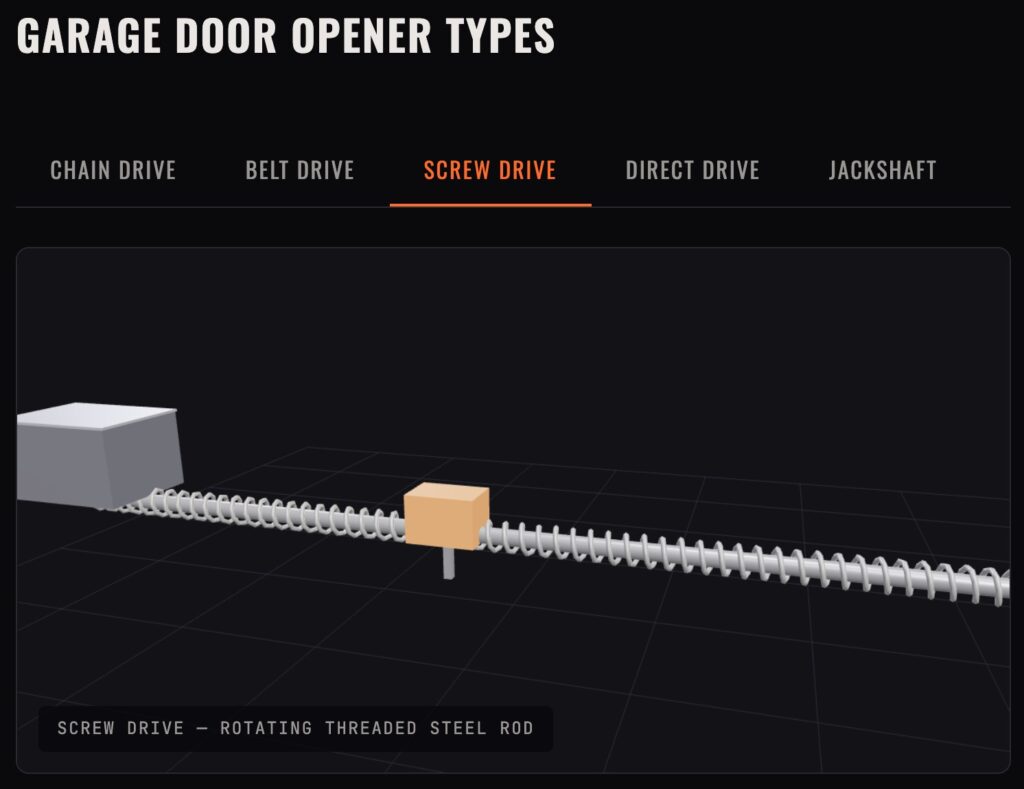
Not all garage door openers work the same way. Our side-by-side 3D models show you the mechanical differences between the four main drive types:
- Chain Drive — The classic workhorse with sprocket and chain
- Belt Drive — Quieter operation with a reinforced rubber belt
- Screw Drive — A threaded steel rod with fewer moving parts
- Direct Drive — The motor itself moves along the rail
Seeing them in motion makes it immediately clear why some are quieter, some are more durable, and some need more maintenance.
Inside the Motor
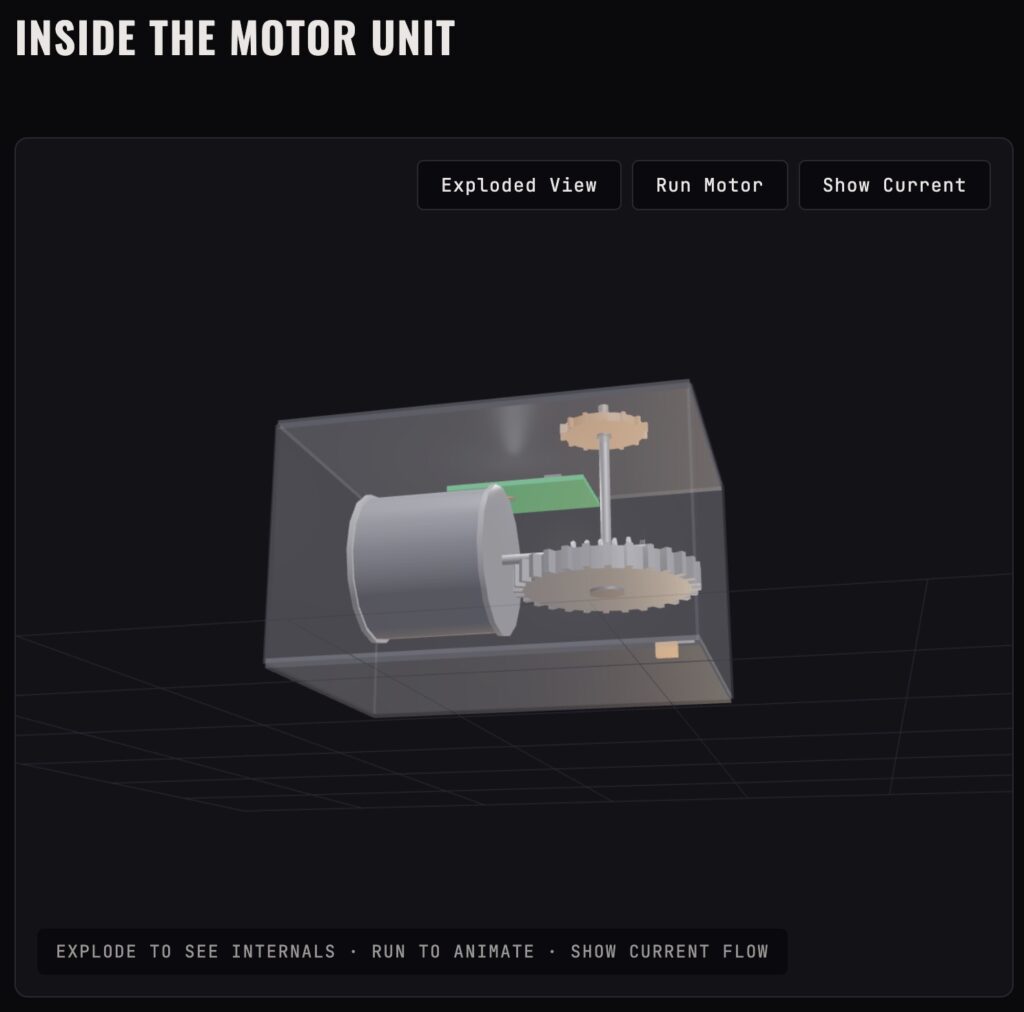
We built an exploded-view model of a PSC (Permanent Split Capacitor) motor — the type found in most residential openers. Toggle between assembled and exploded views to see the stator coils, squirrel cage rotor, worm gear reduction, capacitor, circuit board, and limit switches. Run the motor to watch the rotor spin and the gears turn.
Smart Home Integration
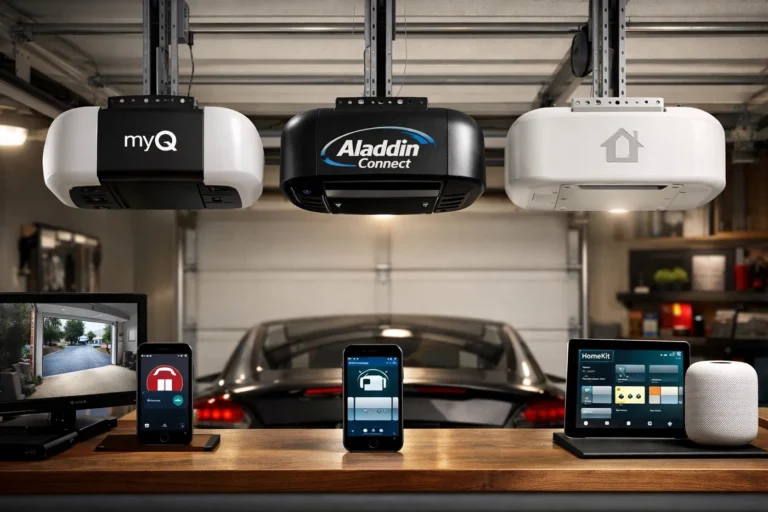
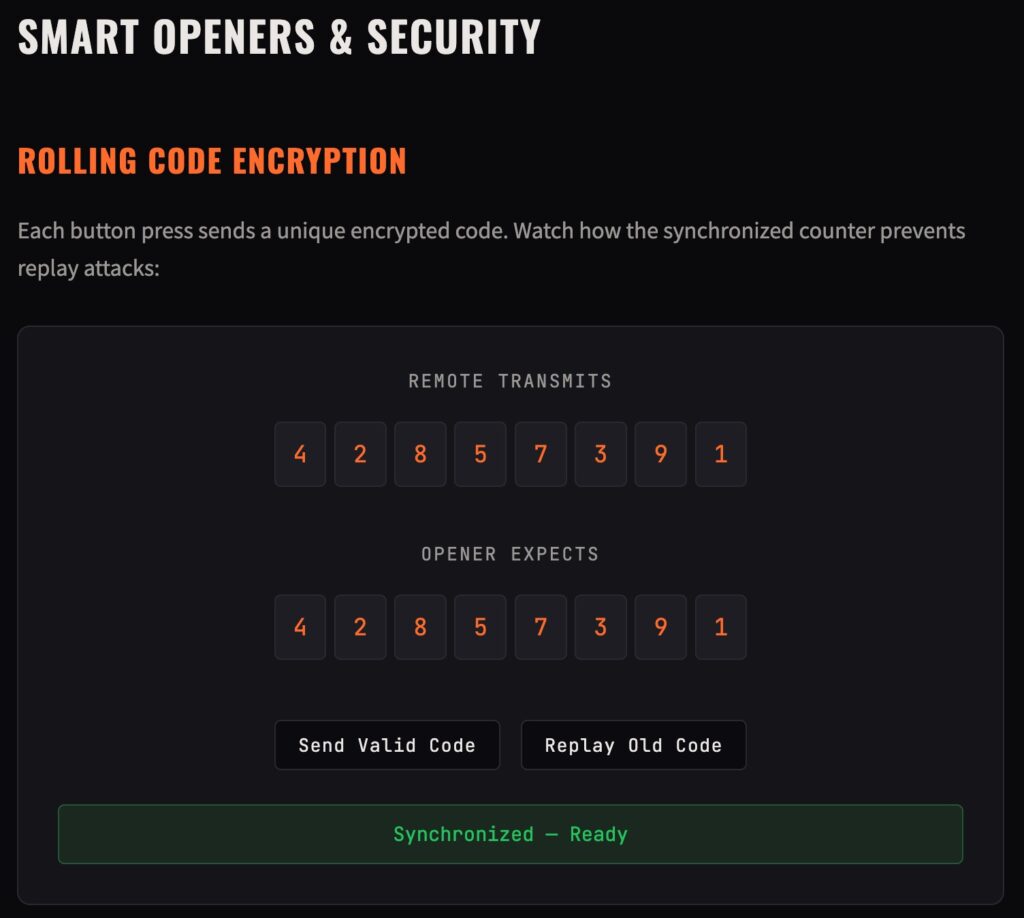
Modern garage door openers connect to Wi-Fi, HomeKit, and cloud services. Our 3D visualization maps out the full IoT ecosystem — hub, phone, router, remote, and safety sensors — so you can see how all the pieces talk to each other.
Why Your LED Bulbs Might Be Killing Your Remote Range
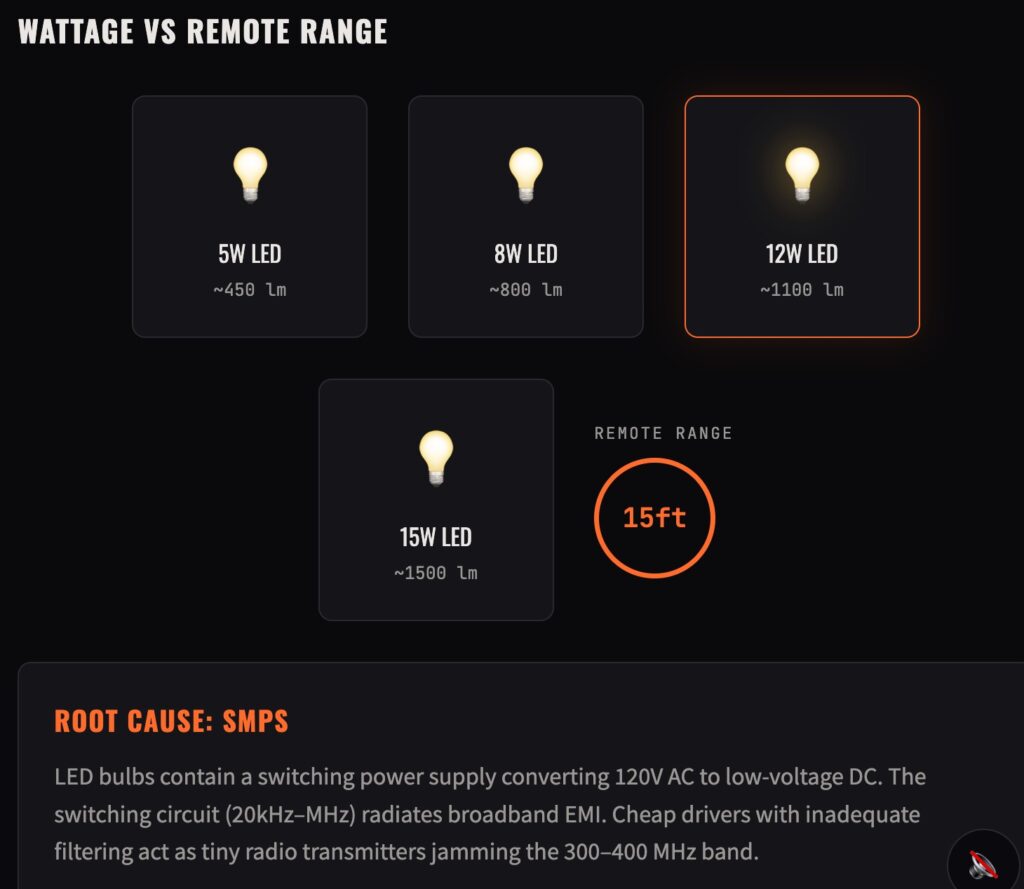
This one surprises most people. Certain LED bulbs emit radio-frequency interference that can cut your garage door remote’s range from 50 feet to 3 feet. Our interactive demo lets you swap between different bulb wattages and watch the signal strength drop in real time. If your remote has been acting up since you switched to LEDs, this is probably why.
Interactive Troubleshooting Guide
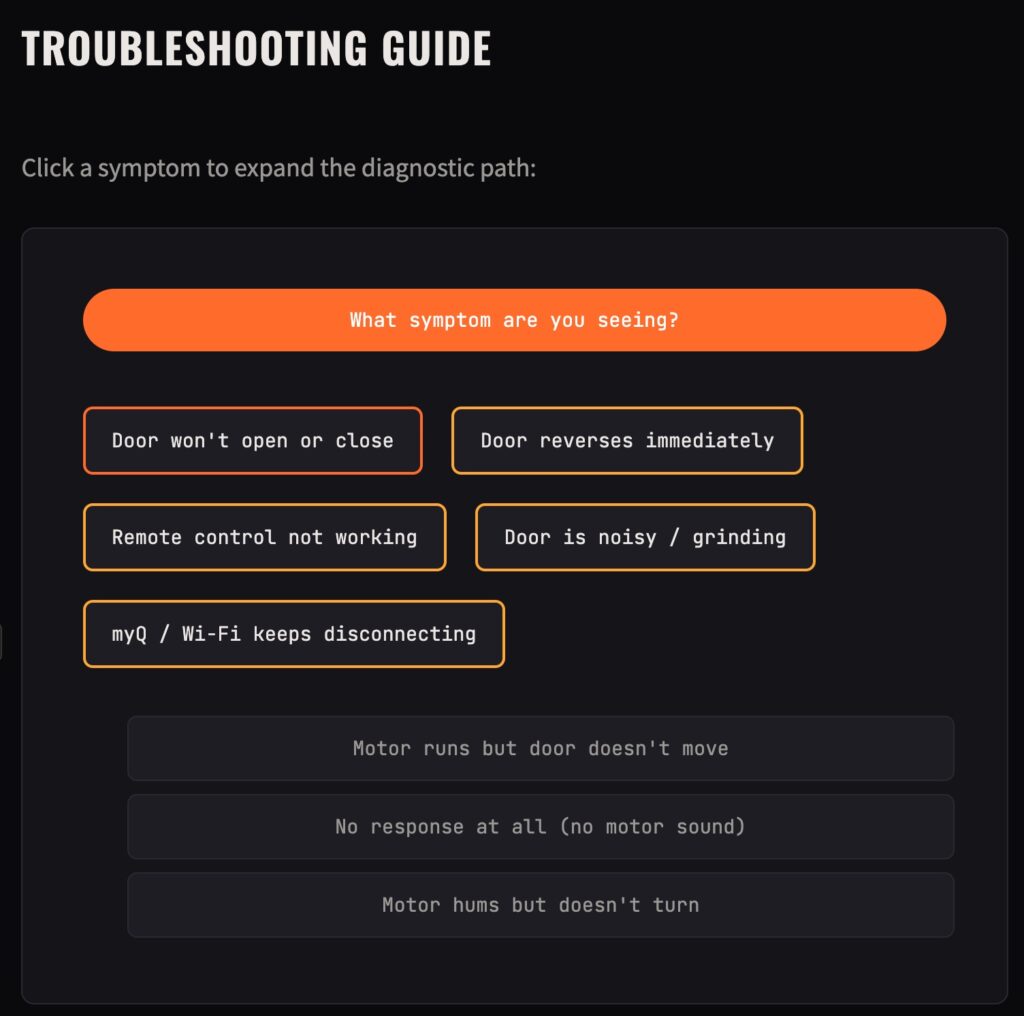
We also included a built-in troubleshooting guide to help you diagnose common garage door problems on your own. Just click the symptom you’re experiencing and follow the diagnostic path:
- Door won’t open or close — Is the motor running, but the door not moving? No response at all? Motor humming but not turning? Each scenario points to a different cause, from a disconnected trolley to a blown capacitor.
- Door reverses immediately — Usually a safety sensor or force setting issue. The guide walks you through checking sensor alignment, identifying obstructions, and adjusting limits.
- Remote control not working — Before you replace the batteries, the guide helps you rule out LED interference, range issues, and the need for reprogramming.
- Door is noisy or grinding — Grinding, squealing, and rattling all mean different things. The guide helps you pinpoint whether the issue is with the rollers, hinges, chain, or spring.
- MyQ / Wi-Fi keeps disconnecting — Smart opener losing connection? The guide covers router placement, signal strength, and firmware updates.
It’s like having a garage door tech walk you through the basics before you pick up the phone.
Try It Yourself
We made this tool free and open for anyone to explore. Whether you’re a homeowner, a fellow garage door professional, or just someone who appreciates good engineering, we think you’ll find something interesting.
Launch The Science of Garage Doors →
Have questions about your garage door system? A+ Garage Doors is here to help. Contact us today for expert service, repair, and installation.