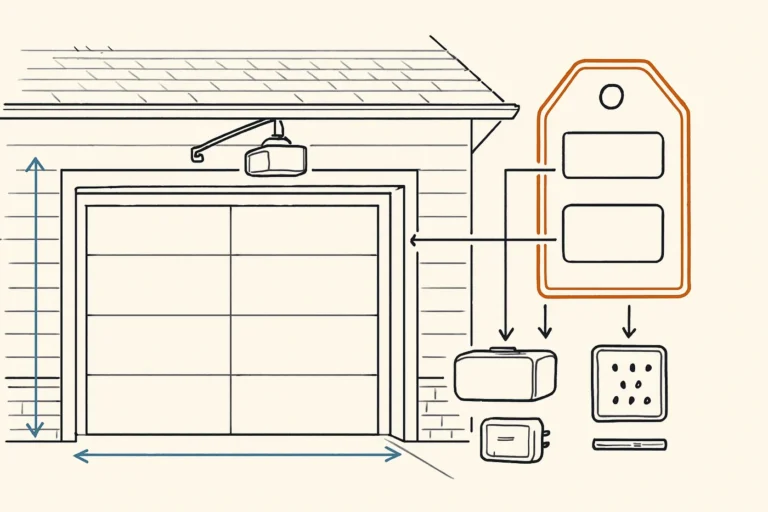
Manual Release Cord: Why Every Homeowner Should Know How to Use It
There’s a red cord hanging from your garage door opener that you’ve probably never touched. That cord is the manual release—and knowing how to use it could be the difference between being trapped in your garage during a power outage and getting your car out safely. In Las Vegas, where summer power outages from grid strain and monsoon storms are common, every homeowner should know how this simple mechanism works. Garage Door Science explains How Garage Door Safety Sensors Actually Work.
This guide covers how the manual release works, when to use it, when not to use it, and a critical safety consideration that most homeowner guides skip. If you’re dealing with a garage door emergency, understanding the manual release is your first step.
What the Manual Release Does
The manual release cord (red handle, hanging from the opener rail) disconnects the trolley from the opener’s drive mechanism. When disconnected, the door is no longer connected to the motor—you can lift and lower it by hand, just like a garage door without an opener.
This mechanism exists for two primary reasons:
- Power outages — The opener can’t function without electricity, but you still need to operate the door
- Opener failure — If the motor, circuit board, or drive mechanism fails, the manual release lets you continue using the door until repairs are made
How to Use the Manual Release: Step by Step
When the Door Is Closed (Most Common Scenario)
- Pull the red cord down and toward the opener — You’ll hear a click as the trolley disconnects from the drive carriage
- Lift the door manually — Grip the door at the bottom and lift straight up. With properly functioning springs, the door should feel light (20-30 lbs of effort)
- Prop the door open if needed — A C-clamp or vise grip on the track below the bottom roller prevents the door from rolling back down
When the Door Is Open
- Support the door before pulling the cord — If springs are weak, the door could drop when disconnected from the opener
- Pull the red cord down and toward the opener
- Lower the door slowly by hand — Control the descent; don’t let it free-fall
- Lock the door — With the opener disconnected, the door’s built-in lock (if equipped) is your only security
Reconnecting After Power Returns
- Pull the red cord straight down (toward the floor) — This resets the trolley to reconnect mode
- Press the wall button or remote — The opener will run until the trolley catches the drive carriage and re-engages
- Test — Open and close the door once to verify normal operation
Critical Safety Warning: Broken Springs
NEVER use the manual release if your springs are broken. This is the most dangerous mistake homeowners make. Here’s why:
- Without spring assistance, a standard residential garage door weighs 150-400 lbs
- If the door is open and you disconnect the opener with broken springs, the door will crash down with full force
- If the door is closed with broken springs and you try to lift it manually, you likely won’t be able to—and attempting to do so risks serious back injury
If you suspect a broken spring (you heard a loud bang, the door feels extremely heavy, or you see a gap in the spring coils), do not use the manual release. Call for professional help instead. For safe emergency procedures, see Utah Garage Doors’ guide on how to manually open your garage door safely.
Las Vegas-Specific Scenarios
Summer Power Outages
Las Vegas power outages during summer heat waves present a unique challenge. Your garage may be 130°F+ with no ventilation. When using the manual release during a summer outage:
- Work quickly—prolonged time in an unventilated 130°F garage is dangerous
- Have water accessible before entering the garage
- Open the door first to ventilate before spending time inside
- If possible, wait for cooler hours (early morning or after sunset)
Monsoon Storm Power Loss
Monsoon storms (July-September) can knock out power and leave you needing to secure your garage against wind and rain:
- If the door is open during a power outage, use the manual release to close it
- Engage the manual door lock after closing (most doors have a slide lock on the inside)
- Do not operate the door during active high winds—the door can act as a sail and be pulled from the tracks
Security Concern: The Manual Release Vulnerability
An important security consideration: on many older garage doors, the manual release can be activated from outside using a coat hanger pushed through the top of the door. This allows anyone to disconnect the opener and lift the door by hand.
How to protect against this:
- Install a manual release lock/shield — available at most hardware stores for $10-25
- Use a zip tie through the manual release to prevent unauthorized activation (but cut it during an actual emergency)
- Ensure your door’s built-in slide lock is functional as a backup
For further security tips and emergency procedures, see Utah Garage Doors’ guide on common issues requiring emergency repair.
Protect Your Garage Door with the Diamond Service Club
Diamond Service Club members receive annual verification that the manual release mechanism is functioning properly—a check that’s often overlooked until an emergency. Technicians also test spring balance to ensure the door can be safely operated manually if needed.
What Our Las Vegas Customers Say
Frequently Asked Questions About the Manual Release
Will using the manual release damage my opener?
No. The manual release is designed for regular use and does not affect the opener mechanism. The trolley simply disconnects and reconnects as needed.
My manual release cord is stuck. What do I do?
The release mechanism can become stiff from dust accumulation or lack of use. Apply silicone lubricant to the trolley mechanism and try again. If it’s still stuck, a technician can free it during a service visit. Don’t force it—you could break the release arm.
Can I leave the door disconnected from the opener permanently?
You can, but the door won’t have the security of the opener holding it closed. The opener’s drive mechanism acts as a lock when engaged. Without it, you’ll need to rely on the manual slide lock on the inside of the door.
How do I know if my springs are broken before using the manual release?
Look for: a visible gap in the spring coils, a loud bang you heard earlier, or the door sitting unevenly. If in doubt, do not use the manual release with the door in the open position. With the door closed, the risk is lower since the door’s weight rests on the floor.
Should I practice using the manual release before an emergency?
Yes. Pull the cord, manually lift and lower the door once, then reconnect. This takes 2 minutes and ensures you know the process before you need it. It also verifies that the mechanism isn’t stuck and that your springs are balanced enough for manual operation.