

Insulating a Garage Door to Keep Your Nevada Home Cooler in Summer
It’s two in the afternoon in July and you’ve just stepped into your garage. The concrete is warm through your shoes. The shared wall between the garage and your kitchen is doing its best, but the door has been absorbing direct sun since eight in the morning and it’s radiating that heat inward like a wide, slow furnace. Your air conditioner has been running since before lunch. These two facts are connected.
In the Las Vegas Valley, summer highs clear 110°F for weeks at a stretch. In Reno and Carson City, summer days regularly hit the mid-90s with intense high-desert UV. In both climates, an uninsulated garage door is one of the largest unmanaged heat loads on the house. Most of the fix is not complicated. It’s insulation, seals, and a clear sense of what’s worth doing yourself.
What a bare door is actually doing to your cooling bill
Put a number on it. A standard 16×7 single-layer steel door with no insulation (R-0) facing a 38-degree temperature differential loses roughly 4,256 BTU per hour through the panel alone. The same door built to R-18 loses about 237 BTU per hour. That’s a 94% reduction in heat transfer across the same surface, the same sun, the same afternoon. You can read the full lab on insulating a garage door for summer cooling to see exactly how those numbers move with your climate inputs.
For a 16×7 attached garage in a hot-summer climate, upgrading from R-0 to a polyurethane R-18 door drops annual energy costs from around $385 to about $72. That’s $313 per year. In Vegas, where the cooling season runs from May through October and the temperature differential the door must fight is larger for more hours per day, the payback period from R-0 to R-18 can be under two years. The insulated garage door payback calculator will show you where your specific situation lands.
R-value on a garage door: what the number means and what it doesn’t
R-value is resistance to heat flow. Higher is better. But the number on the door’s spec sheet is not the number you get in practice, because a garage door is not a solid wall. It has panel seams, a bottom edge, and a perimeter, and heat travels through any of them. The full explanation of garage door insulation R-value covers the gap between rated and actual performance in detail.
Material matters, too. Polyurethane foam delivers roughly R-6.5 per inch of thickness. Polystyrene delivers about R-4 per inch. A 2-inch polyurethane door hits R-13. A 2-inch polystyrene door lands closer to R-8. Same door thickness, meaningfully different performance. For an attached garage in Nevada’s heat, the useful working range is R-12 to R-16. Going higher than that on the door alone gives you diminishing returns unless the garage walls and ceiling are also insulated. If they’re not, the door is no longer the weak link.
The seals are doing as much work as the foam
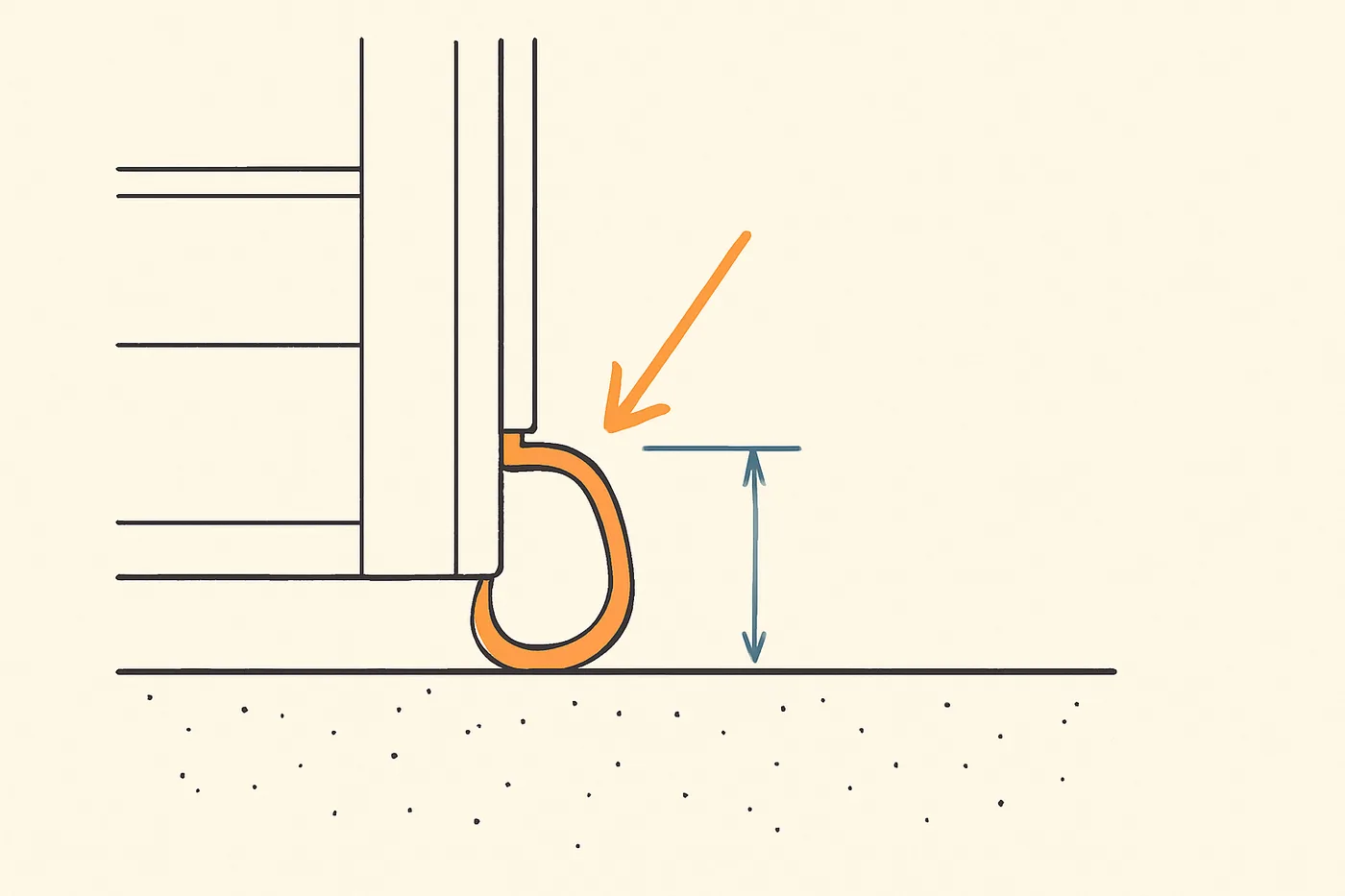
Panel insulation slows conductive heat transfer. Seals stop air from moving around the panel entirely. If the seals are shot, R-18 on the panels will not save you. Three seals matter: the bottom U-shaped rubber that presses flat against the floor, the jamb weatherstripping up both sides and across the top, and the seams between panels.
The bottom seal usually fails first. It typically lasts five to ten years before the rubber loses its compression memory and stops pressing flat. In Las Vegas, that timeline runs shorter. Heat bakes rubber, and a seal that might last a decade in a milder climate is often done in six or seven years in the Mojave. When it goes, hot outside air walks straight under the door. A threshold seal kit for a 16-foot door runs $50 to $120, and replacing it is a homeowner job. So is jamb weatherstripping, if you’re comfortable with a pry bar and a level. The guide to garage door weather seals walks through which products actually hold up in extreme heat.
Wind matters more than most people expect. A 20 mph wind creates roughly 1.0 to 1.6 pounds per square foot of pressure on a 16×7 door (the range reflects surface exposure conditions), which works out to 110 to 180 pounds pushing air through every gap. During Las Vegas monsoon season, when afternoon gusts carry grit and heat through the valley, bad seals don’t just leak air. They let in dust that settles in tracks and accelerates wear on rollers and hinges. In Reno, summer thunderstorm wind events do the same thing at higher elevation.
What you can do yourself, and where to stop
Foam tape on the panel joints of an uninsulated door is a genuine DIY project, an afternoon, about thirty dollars in materials, no components under tension. Replacing the bottom U-seal is also straightforward on most doors. Retrofit insulation kits, the foam board panels you cut and press into an existing steel door’s frame, are in the same category. They’ll get you from R-0 to roughly R-6 to R-8 depending on the product. Not R-18, but a real improvement from nothing. You can also check our guide to the best insulated garage doors for Nevada homes if you’re weighing retrofit against replacement.
Here is the line. Adding significant weight to a door changes what the springs are holding. Springs do not accommodate that quietly. An opener that was balanced for a 150-pound door is now fighting a heavier one, and the spring tension is wrong for the new load. That leads to opener burnout and, eventually, a spring failure. If you add heavy retrofit panels, get a technician to rebalance the door afterward. If you want to know the current state of your door before doing anything to it, a 24-point inspection will surface any issues with balance, spring condition, and hardware before they compound.
What replacement costs and when it actually pays back
If the door is already old, a retrofit kit is a short-term fix. A mid-grade insulated steel door with polyurethane foam and an R-value between 12 and 18 runs $1,500 to $3,200 installed for a standard 16×7 opening in 2026. An uninsulated single-layer steel door of the same size runs $800 to $1,400. The premium you’re actually paying back through energy savings typically falls in the $800 to $1,200 range, not the full door price. In the Las Vegas Valley, where cooling loads are extreme and the season is long, that gap closes faster than it does anywhere with a milder summer. The garage door insulation guide for Las Vegas covers the seasonal math from both ends of the year.
An insulated door with intact seals also reduces daily thermal cycling on the panels. Steel expands and contracts with temperature. In Las Vegas, a door can swing from 75°F in the morning to 140°F at the panel surface by mid-afternoon. That cycling stresses hinges and track over years. An insulated door is not just a utility bill decision. It’s a door longevity decision.
A+ Garage Doors has been doing this work in the Las Vegas Valley and Northern Nevada since 1999. If your door is showing signs of heat damage, stiff seals, groaning at midday, panels that have started to warp, the call to make is (702) 707-2305 for the Las Vegas Valley. Read the full guide on Garage Door Science for the complete technical breakdown, including the energy math behind every number cited here.
Protect Your Investment with the Diamond Service Club
Worried about preventing the next garage door issue before it happens? Joining our Diamond Service Club gets you annual preventive maintenance, priority scheduling, and member discounts on repairs. It is investment protection for one of your home’s largest moving systems.
What Our Las Vegas Customers Say
Frequently Asked Questions
How much does insulating a garage door actually save on my Las Vegas energy bill?
Upgrading from an uninsulated (R-0) door to a polyurethane R-18 door can drop annual cooling-related energy costs from roughly $385 to about $72 for a standard 16×7 attached garage. In Las Vegas, where summer highs exceed 110°F for weeks and the cooling season runs May through October, the payback period can be under two years. The exact savings depend on your door size, insulation level, and how many hours per day the differential is wide.
What R-value should a garage door have in Nevada’s heat?
For an attached garage in Nevada, R-12 to R-16 is the useful working range. Going higher than R-16 on the door alone gives diminishing returns unless the garage walls and ceiling are also insulated. Polyurethane foam delivers about R-6.5 per inch, compared to roughly R-4 per inch for polystyrene, so the same door thickness produces meaningfully different performance depending on the fill material.
Can I add insulation to my existing garage door myself?
Retrofit foam board kits are a legitimate DIY project and can move an uninsulated door from R-0 to roughly R-6 to R-8. Foam tape on panel joints and replacing the bottom U-seal are also homeowner-friendly jobs. The limit is weight: adding heavy panels changes the load the springs are holding, and a door that’s no longer balanced for its new mass will wear out the opener and stress the springs. Get a technician to recheck balance after any significant retrofit.
How long do garage door weather seals last in the Las Vegas heat?
The bottom U-seal typically lasts five to ten years in moderate climates, but in Las Vegas the Mojave heat bakes rubber faster and six to seven years is a more realistic ceiling. Jamb weatherstripping lasts longer but fails quietly: the rubber stiffens and pulls back a few millimeters, leaving a thin continuous gap you won’t notice until a windy day. Replacing seals runs $50 to $120 for a 16-foot door in materials.
When does it make more sense to replace the garage door than to insulate the existing one?
If the door is more than 15 to 20 years old, showing panel warping, or running on springs near the end of their rated cycle life, a retrofit kit is a short-term fix on a door that’s already declining. A mid-grade insulated steel door runs $1,500 to $3,200 installed for a 16×7 opening in 2026. The energy-savings premium over an uninsulated door typically falls in the $800 to $1,200 range, and in Nevada’s heat that payback arrives faster than in milder climates.
Does monsoon season in Las Vegas make garage door insulation more important?
Yes. Monsoon-season afternoon gusts carry grit through any gap in the door’s seals, and that fine desert dust settles in tracks and accelerates wear on rollers and hinges. Wind at 20 mph creates roughly 180 pounds of pressure pushing air through a 16×7 door, which can triple infiltration rates through failed seals. Good perimeter sealing during monsoon season protects hardware, not just the cooling bill.


