

What your garage door rollers and hinges are trying to tell you
You hit the button. The door moves, gets about halfway up, and makes a sound you don’t remember from last spring. Not a screech. Not a bang. A low, dragging grind that says something in the track is no longer rolling the way it used to. In Las Vegas, that sound tends to show up in October, after a summer of 110-degree heat has done its quiet work. In Reno, it’s more likely a February morning, after freeze-thaw cycles have stiffened everything that was already getting stiff.
That sound is almost always coming from your rollers or your hinges. And the reason you’re hearing it now, instead of six months ago, is that these parts wear slowly, until the day they don’t.
What rollers actually do, and how they fail
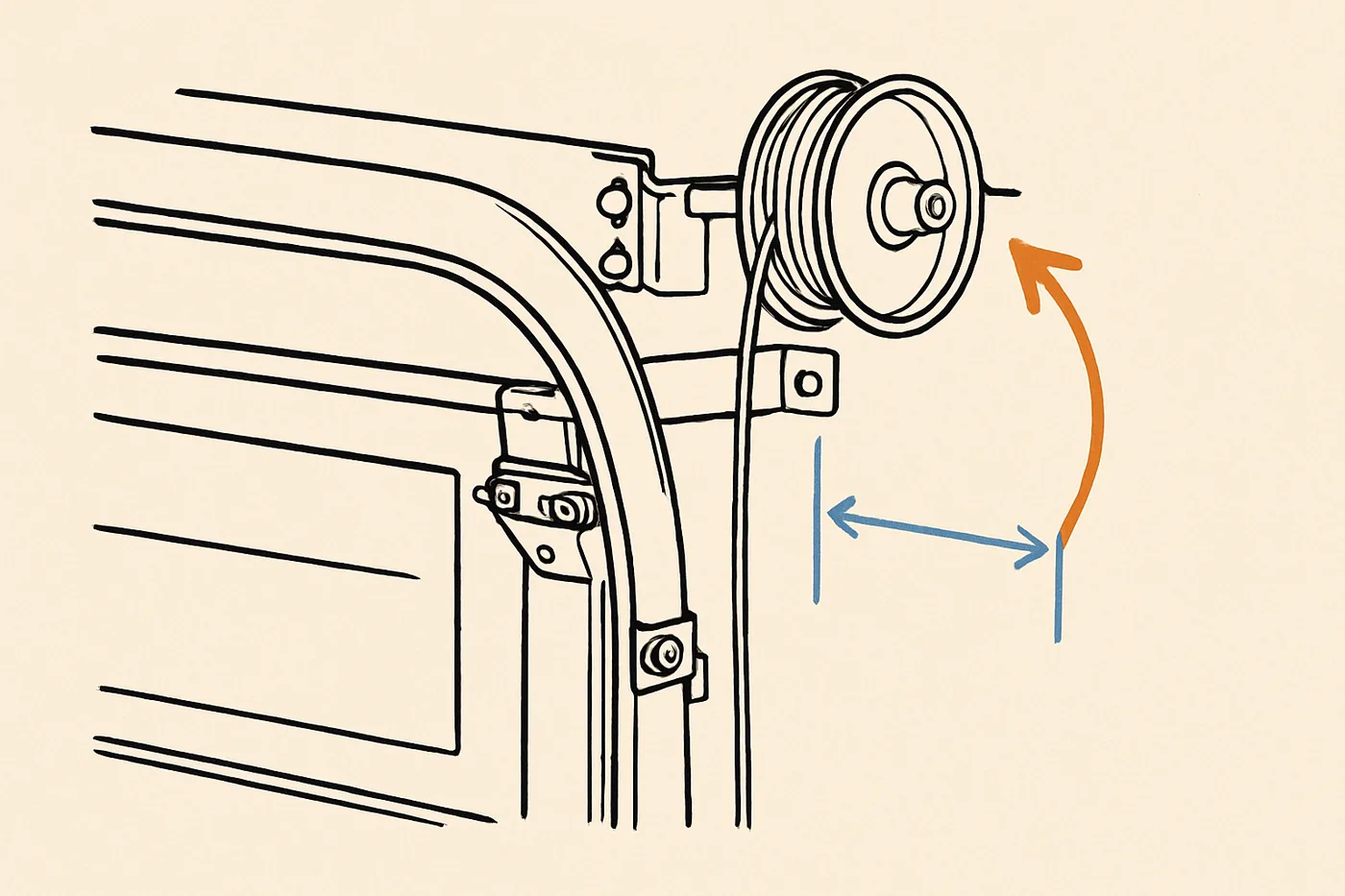
A roller is a small wheel on a stem with a bearing inside it. Every time your door opens or closes, ten of these wheels carry the full weight of the door around the curved section of the track. Cheap steel rollers use unsealed bearings. After a few years of daily use, those bearings start to wobble. The door shimmies side to side in the track, or you hear grinding on the way up and the way down. Once the bearing fails completely, the wheel stops spinning and skids along the steel track instead, a deeper, uglier sound than a bearing complaint. You can see where each roller sits in the door’s assembly to understand which one is likely making the noise.
Nylon rollers are quieter. The wheels are tougher plastic, the bearings are usually sealed, and a door running on nylon sounds like a refrigerator instead of a freight car. The tradeoff: nylon wears faster under a heavy insulated door, which is most of what gets installed in the Las Vegas Valley these days. Nylon rollers will be quiet for a long time, and then suddenly not. For a deeper look at roller and hinge wear patterns, read the full breakdown of what these parts are actually telling you.
Hinges crack where you can’t see them
The hinges between your door’s panels flex thousands of times a year as the door bends around the track curve. They crack at the rivet points after long service, most often on insulated panels, where the extra weight puts more load on the metal every single cycle. The cracks start as a hairline at the rivet. Then a longer split. Then the hinge starts to flop, the panel above loses alignment with the panel below, and now your rollers are fighting the track because the door’s geometry has changed.
Walk along your closed door from the inside and look at every hinge between every section. A hinge that’s bent, cracked, or rattling loose is already past the warning stage. In Reno and Carson City, UV intensity accelerates fatigue on painted metal surfaces, hinges that look fine from the outside can be cracked at the back face where you never look.
The compounding cost of ignoring both
Here’s what you don’t realize until the bill arrives. When rollers drag and hinges flex wrong, the opener compensates silently. It doesn’t warn you. It works harder across its entire service life, and that extra load shows up later as a burned-out motor or stripped gears in the opener head. The spring takes extra torque to lift a door that should be gliding. Everything ages at once. A door that should run 20 to 25 years can start breaking down across multiple systems at 15. What looks like bad luck is a chain reaction that started with parts nobody lubricated. An out-of-balance door can turn a $200 spring job into a $600 repair by the time cables and gears are added to the ticket.
Lubrication: the cheapest thing you will ever do for this door
The biggest cause of early roller and hinge wear is dry metal-on-metal contact. A thin film of lubricant is the difference between a roller that lasts 7 years and one that lasts 15. Twice a year, take a can of lithium-based spray or a dedicated garage door oil and apply it to three places: each roller axle where the stem meets the wheel, each hinge pivot where the two halves meet, and the bearing plates at either end of the torsion spring shaft. How often you actually need to lubricate depends on your climate and cycle count, the answer is different for a Henderson garage that runs twice a day versus a Carson City garage that sits mostly closed all winter.
Do not use WD-40. It’s a solvent. It will strip whatever thin film is left, and it evaporates in Nevada heat faster than you’d think. In Las Vegas summers, standard lubricants can dry out in as little as three months. In Reno winters, a lubricant not rated for cold temperatures will thicken and resist. Lithium grease or a silicone-based garage door oil handles both ends of the range. A yearly maintenance checklist lays out the full sequence if you want to do this right once and not think about it again.
What you can replace, and where the line is
The mid-panel rollers, the ones that sit in the hinges along the sides of each section, are a homeowner job. You pop the panel slightly out of the track, slide the old roller stem out, slide the new one in, seat it back. A replacement roller costs about $5. Center hinges between panels can be swapped by a careful homeowner if the door is fully open and the panel above the damaged hinge hasn’t shifted out of alignment. If the alignment is off, you’re looking at a track adjustment that belongs to a tech.
The bottom roller is not that job. It sits inside a bracket that the lift cable attaches to. That cable is under spring tension whenever the door is closed. The bracket is loaded. Do not loosen it. The cable can whip.
Stop there. Call someone. The top roller has the same answer, it sits behind the curve of the track in a spot you can’t reach without removing hardware that holds the door’s geometry in place. That hardware is not yours to touch.
What to do this week
Start with a close look at the hinges and a listen on the next full open-and-close cycle. A new grinding sound is a roller bearing. A rattle at one panel is a hinge. A door that shimmies in the track is rollers wobbling on their stems. A hesitation at the curve is geometry shifting because something between two panels has cracked or bent. If you want a structured starting point, running through the wear pattern guide gives you a methodical way to read every part of the door before calling anyone.
A roller costs $5. A hinge costs $10. A can of lithium spray is less than lunch. The opener that burns out from pulling too hard for too long costs $400 to replace. The spring that snaps early because the door was fighting itself costs $200 to $350 more.
A+ Garage Doors has been handling roller and hinge replacements in Las Vegas and Reno since 1999. Same-visit repair, real local techs. Las Vegas Valley: (702) 707-2305.
Protect Your Investment with the Diamond Service Club
Worried about preventing the next garage door issue before it happens? Joining our Diamond Service Club gets you annual preventive maintenance, priority scheduling, and member discounts on repairs. It is investment protection for one of your home’s largest moving systems.
What Our Las Vegas Customers Say
Frequently Asked Questions
How do I know if my garage door rollers need to be replaced?
Listen for a grinding or scraping noise as the door moves, and watch for the door shimmying side to side in the tracks. Those are signs the roller bearings have started to fail. Once a roller stops spinning and begins skidding along the steel track, the sound deepens noticeably. In Las Vegas, extreme summer heat accelerates bearing wear, so a roller that sounded fine in March may be grinding by September.
How much does garage door roller and hinge replacement cost in Las Vegas?
A set of mid-panel roller replacements typically runs $75 to $150 for parts and labor on a standard single door. Full hinge replacement across all panels on a double insulated door can run $150 to $250 depending on the number of sections. Bottom bracket hardware and any track realignment needed because of hinge failure adds to that total. Getting it done before something fails keeps the job scoped and the price predictable.
Can I replace garage door rollers myself, or do I need a technician?
The mid-panel rollers are a reasonable DIY job, remove the roller stem from the hinge, swap the roller, reseat it in the track, done. The bottom rollers are not. That bracket holds the lift cable under spring tension, and loosening it while the door is closed can cause the cable to whip. Bottom rollers and top rollers both require a technician. If you’re unsure which roller is making the noise, have a tech diagnose it before you start pulling anything off.
Why is my garage door grinding after a Nevada winter?
Reno and Carson City sit between 4,500 and 4,800 feet, and freeze-thaw cycles stiffen lubricant and expand metal parts that then bind against each other. If your roller or hinge lubricant dried out or thickened over the winter, you’ll hear grinding on the first warm runs of the season. A lithium-based spray or silicone garage door oil applied in the fall helps prevent this; WD-40 does not, because it evaporates instead of lubricating.
What happens if I ignore a cracked garage door hinge?
A cracked hinge lets the panel above it drift out of alignment with the panel below. Once alignment shifts, your rollers start fighting the track geometry on every cycle, which accelerates roller wear and puts extra load on the opener motor and spring. What started as a $10 hinge replacement can compound into a spring replacement and an opener repair. The hinge cracks slowly and then fails fast, catching it at the hairline stage is the cheapest version of this repair.
How often should I lubricate garage door rollers and hinges in Nevada?
Twice a year is the baseline, but Las Vegas homeowners in extreme summer heat may need to add a third application in midsummer, because lithium-based lubricants can thin and migrate off metal surfaces faster at sustained temperatures above 100 degrees. Use lithium spray or a dedicated garage door oil on the roller axles, hinge pivots, and bearing plates. Northern Nevada garages should lubricate before winter sets in, using a product rated for cold temperatures.


